
What it is for
Use it for a home roofing job, after the customer picks an option. It is short and plain, so the customer can read every line before they sign.
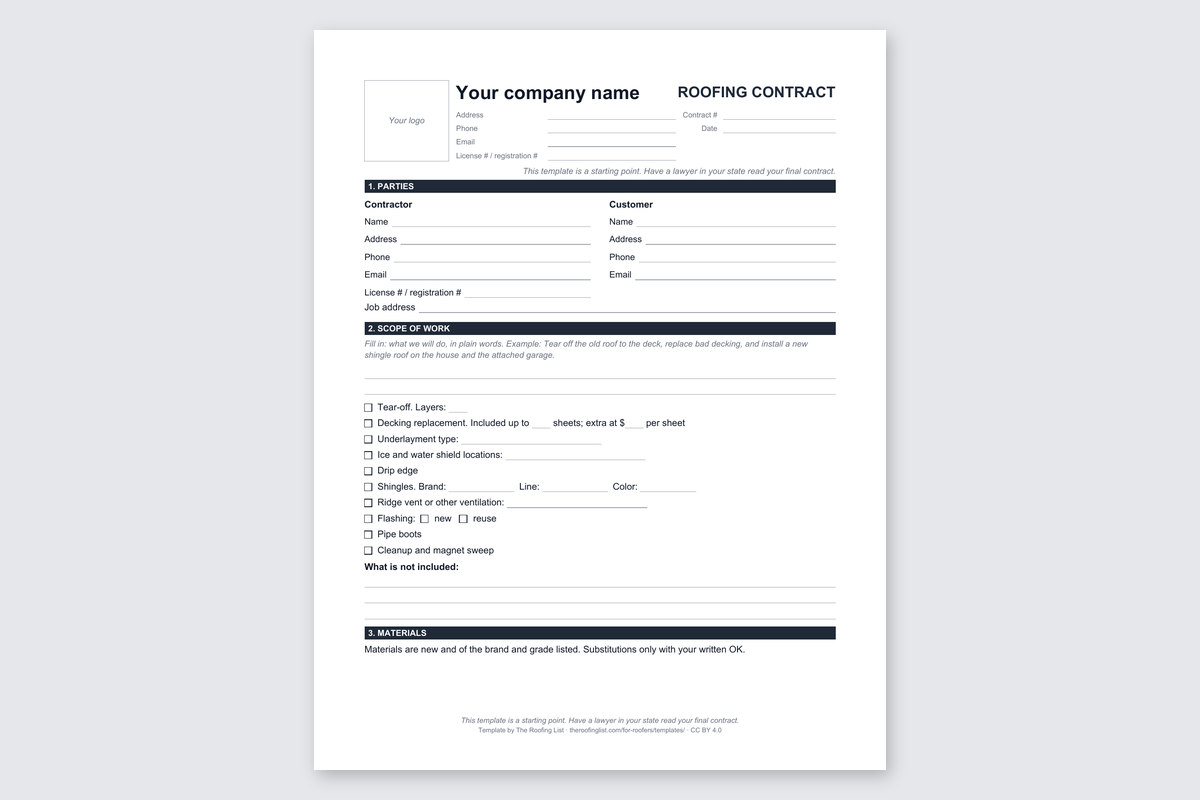
It has 13 sections: parties, scope of work, materials, price and payment, hidden damage and changes, schedule, permits and inspections, insurance, warranty, cleanup, right to cancel, disputes, and signatures.
Two attachments come with it. Attachment A is a Notice of Cancellation, two copies on one page. Attachment B is a table of state notes for the 50 states and DC. It says who licenses or registers roofers in each state, which number to put on the contract, and where the customer can check it.
The state notes come from the same state pages as our homeowner guides. They are a prompt, not legal advice.
How to use it
- Read Attachment B for your state. Put the license or registration number it names in the Parties section.
- Fill in the parties and the job address. Write the scope in plain words, and tick the items in the checklist.
- Fill in the price, the deposit, the progress payment and the balance. Fill in the extra price per sheet of decking, so the hidden damage clause has a number.
- Fill in the start date, the warranty years, the insurer names and the governing state.
- If you sold the job at the customer's home, fill in the Notice of Cancellation and give the customer both copies.
- Go through the contract with the customer. You both sign and date it, and each of you keeps a copy.
What you fill in
- Contract number and date
- Contractor name, address, phone, email and license or registration number
- Customer name, address, phone and email, and the job address
- Scope: tear-off layers, decking sheets included and the extra price per sheet, underlayment, ice and water shield locations, shingles (brand, line and color), ventilation and flashing
- What is not included
- Contract price, deposit, progress payment and when it is due, and the balance
- Start date and estimated days
- Workmanship warranty years
- Insurer names
- Governing state
- Printed names, signatures and dates
Questions people ask
What must a roofing contract include?
A good roofing contract names the parties and sets out the scope, the materials, the price and when each payment is due. It also says how changes get approved, who gets the permits, what the warranty covers and how the customer can cancel. This template has a section for each. Your state can add its own rules, so have a lawyer in your state read your final contract.
Do I need a license number on the contract?
It depends on the state. Some states license roofers, some register them, and some leave it to cities and counties. Arizona and Connecticut, for example, say the number must appear on contracts. See the appendix in the file for your state.
Can I take a large deposit?
Some states limit the deposit on a home improvement job. Our state notes do not list those limits, so ask your state licensing board or a lawyer before you set the deposit. The contract has a note about this under Price and payment.
What is the three-day right to cancel?
The FTC Cooling-Off Rule lets a buyer cancel some sales made at the buyer's home until midnight of the third business day after the sale. The seller must tell the buyer about this right and give two copies of a cancellation form. Attachment A is that form. Some states add their own cancellation rules for roofing jobs that insurance pays for, so ask your state board or a lawyer.
What happens if I find rotten decking?
Stop, show the customer, and price the extra work on a change order before you go on. The contract says no extra charge is due without the customer's signature on a change order. Put your price per sheet in the scope, so the customer knows it before you start. Use our roofing change order form.
Related templates
This template is a starting point. Have a lawyer in your state read your final contract.