
What it is for
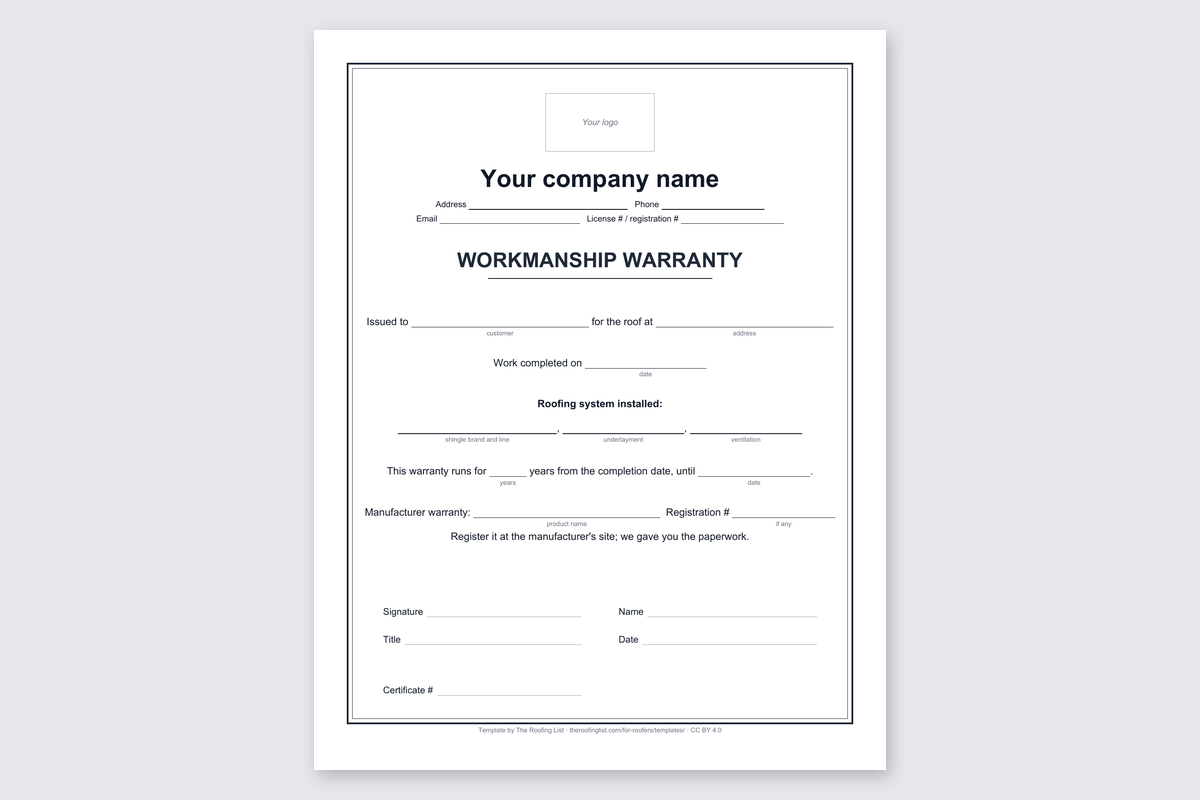
Give it to the homeowner when the job is done. Page 1 is the certificate they keep. Page 2 is the terms.
It keeps two promises apart. Your workmanship warranty covers your installation. The manufacturer warranty covers the materials. Homeowners often mix them up, and this file says which is which.
How to use it
- Fill in the customer, the roof address and the completion date.
- List the roofing system: shingle brand and line, underlayment and ventilation.
- Fill in the warranty years and the end date.
- Fill in the manufacturer product and the registration number. Register the manufacturer warranty, or give the homeowner the paperwork to do it.
- On the terms page, fill in how many days the homeowner has to tell you about a leak, and tick whether the warranty transfers.
- Sign it, give the homeowner a copy, and keep one in the job file.
What you fill in
- Certificate number
- Customer name and roof address
- Completion date
- Shingle brand and line, underlayment and ventilation
- Warranty years and end date
- Manufacturer product name and registration number
- Days the homeowner has to report a leak
- Transfer: once to a new owner, or not transferable
- Your signature, name, title and date
Questions people ask
What is the difference between a workmanship warranty and a manufacturer warranty?
A workmanship warranty is your promise about your installation: leaks and defects caused by how you put the roof on. A manufacturer warranty is the maker's promise about the materials. If a shingle fails because of a defect, the claim goes to the manufacturer, and you can help the homeowner file it.
How long should a roofing workmanship warranty be?
Common terms run from 1 to 10 years, and some roofers give longer. Pick a term you can honor. A shorter warranty you keep is better than a long one you cannot.
Does the warranty transfer to a new owner?
Only if you say so. The terms page has two boxes: transferable once to a new owner within the term, or not transferable. Tick one before you sign. Manufacturer warranties have their own transfer terms, so read the maker's terms.
What voids a roof warranty?
This template does not cover damage from storms, hail, wind over the shingle's rating, falling objects, other trades' work, foot traffic by others or lack of maintenance. It also asks the homeowner to tell you about a leak within the days you set. Manufacturer warranties have their own conditions, so read the maker's terms too.
Should I register the manufacturer warranty for the customer?
Many roofers do, because it is easy to forget. Register it yourself, or give the homeowner the paperwork and the maker's website. The certificate has a line for the registration number.
Related templates
This template is a starting point. Have a lawyer in your state read your final contract.